What Is Two-Way Audio in Security? How Verbal Deterrence Resolves 60–80% of Intrusions
Two-way audio in security systems is the capability for RSOC operators to both hear ambient sound from a monitored location and speak directly to individuals at that location through deployed speaker infrastructure — enabling verbal deterrence, de-escalation, and communication from a remote monitoring center. It is the capability that transforms a security camera from a passive recording device into an active intervention tool.
The verbal deterrence function of two-way audio is the single most effective non-physical security intervention available: an RSOC operator who can identify that the property is monitored, that law enforcement has been notified, and who directs an individual to leave the property — speaking directly through a speaker at the location — resolves the majority of trespassing and intrusion events without any physical security response. Studies and operational data from remote monitoring providers consistently show that verbal deterrence resolves 60–80% of intrusion events when it is available and applied promptly.
How Two-Way Audio Works in Security Deployments
Two-way audio capability requires two hardware components at the monitored location: a speaker for RSOC operator output and a microphone for ambient sound capture. These components are integrated into surveillance trailers, fixed camera enclosures, and drone platforms — with the audio feed transmitted to and from the RSOC through the same cellular or fiber connectivity used for video.
Surveillance trailer integration: Mobile surveillance trailers include built-in speakers and microphones as standard components — delivering verbal deterrence capability at any location where the trailer is deployed, without additional infrastructure
Fixed camera with audio: Fixed security cameras with integrated microphones and connected speakers provide two-way audio at permanent installation points — entry gates, loading docks, and high-traffic areas
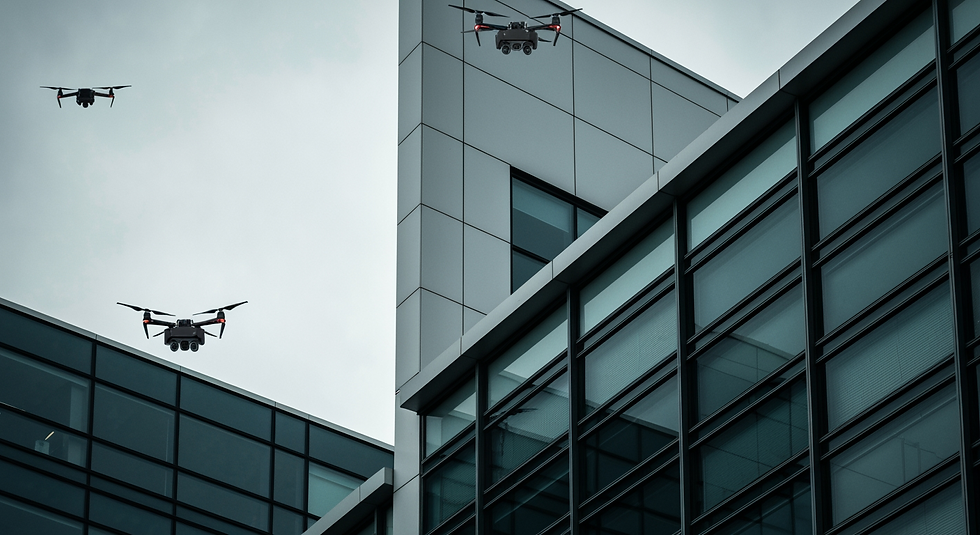
Drone-mounted audio: Security drones equipped with speakers and microphones enable aerial verbal deterrence — an RSOC operator speaking through a drone hovering overhead produces a powerful deterrence effect combining visible aerial presence with direct verbal challenge
Two-Way Audio and Legal Considerations
Audio recording and transmission is subject to state wiretapping and eavesdropping laws that vary significantly by jurisdiction. Most states are 'one-party consent' states — where recording a conversation requires the consent of only one party (the recorder). California, Florida, Illinois, and several other states are 'all-party consent' (two-party consent) states — where recording a private conversation requires the consent of all parties.
For commercial security applications, the legal framework is typically satisfied by: prominent signage notifying that the property is under audio and video monitoring, limiting audio recording to areas where individuals have no reasonable expectation of privacy (exterior areas, common areas), and operational protocols that distinguish audio deterrence (speaking to trespassers) from audio recording of private conversations.
Consult legal counsel familiar with the specific state law in each jurisdiction where two-way audio is deployed — the legal requirements vary enough between states that general guidance is insufficient for compliance purposes.
The Psychology of Verbal Deterrence
Two-way audio works as a deterrent because it eliminates the anonymity that most property criminals rely on. Trespassers, vandals, and theft perpetrators typically operate under the assumption that they are unobserved — even when cameras are visible, the assumption is often that footage will be reviewed after the fact, not in real time. When a voice addresses them directly, identifying their location and describing their actions, that assumption collapses instantly.
The RSOC operator's verbal intervention follows a calibrated protocol: identify the individual by location and visible characteristics, state that they are being monitored on live video, instruct them to leave the property immediately, and inform them that law enforcement has been notified. The specificity of the address — naming the exact location, describing what the person is wearing or doing — demonstrates real-time awareness that generic recorded warnings cannot replicate.
Operational Integration With Autonomous Systems
Two-way audio reaches its highest effectiveness when integrated with autonomous drone and robotic patrol. A drone can follow an individual while the RSOC operator communicates through the nearest ground-based speaker, or through speakers mounted on the drone itself. This combination creates a persistent, visible security response that most intruders find psychologically overwhelming — the facility is clearly aware of their presence, clearly watching them in real time, and clearly capable of sustained pursuit.
The documentation value is equally significant. Two-way audio creates timestamped recordings of verbal exchanges that become part of the incident record. When an RSOC operator instructs someone to leave and that person remains, the recorded verbal trespass warning strengthens the legal foundation for law enforcement response and any subsequent prosecution.
How DSP Addresses This Challenge
DSP's RSOC operators use two-way audio intervention as a primary deterrence tool — speaking directly to individuals at monitored locations through integrated speaker systems, resolving the majority of intrusion events without requiring physical response.
FAQ: Two-Way Audio
Does two-way audio actually deter intruders?
Yes — operational data from RSOC monitoring providers consistently shows that verbal deterrence via two-way audio resolves 60–80% of trespassing and intrusion events without requiring physical security response. The combination of being addressed directly by a voice from overhead (in drone deployments) or from a visible monitoring unit, with the information that law enforcement has been notified, resolves most opportunistic intrusion events immediately.
Is audio recording legal on commercial properties?
In one-party consent states (the majority of US states), audio recording is generally legal in areas where individuals have no reasonable expectation of privacy, with appropriate signage notification. In all-party consent states (California, Florida, Illinois, and others), audio recording requirements are more stringent. Always consult legal counsel for the specific state laws applicable to your property before deploying audio recording capability.


Comments